Beat the Street – Shepton Mallet & Wells evaluation
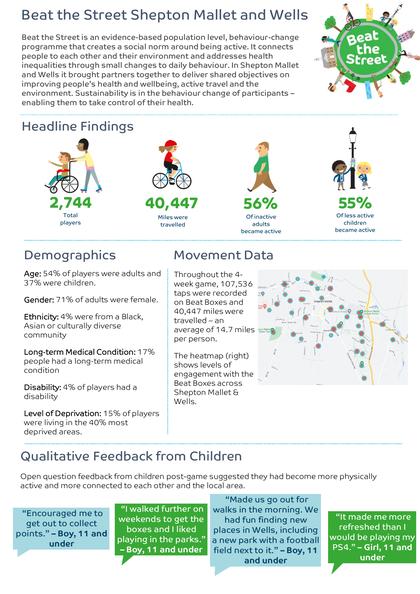
Evaluation of Somerset Activity & Sports Partnership (SASP)’s project – Beat the Street – which was run in Shepton Mallet & Wells in 2023. This is an evidence-based, mass participation programme that enables long-term behaviour change and improved partner working. It connects individuals with their local environment and supports people to make simple modifications to everyday behaviour. Includes a mix of qualitative and quantitative data and what behaviours have been changed as a result.
Beat the Street – Yeovil evaluation
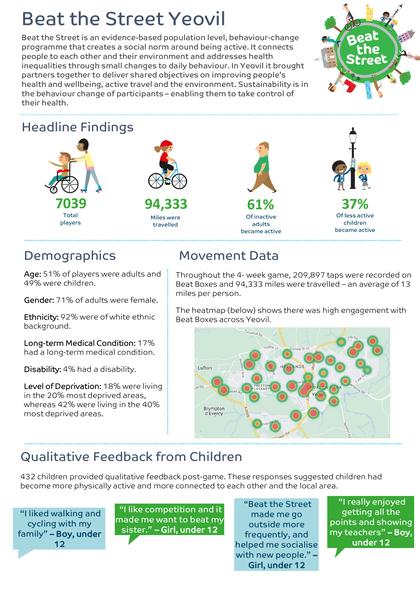
Evaluation of Somerset Activity & Sports Partnership (SASP)’s project – Beat the Street – which was run in Yeovil in 2022. This is an evidence-based, mass participation programme that enables long-term behaviour change and improved partner working. It connects individuals with their local environment and supports people to make simple modifications to everyday behaviour. Includes a mix of qualitative and quantitative data and what behaviours have been changed as a result.
Beat the Street – Bridgwater evaluation
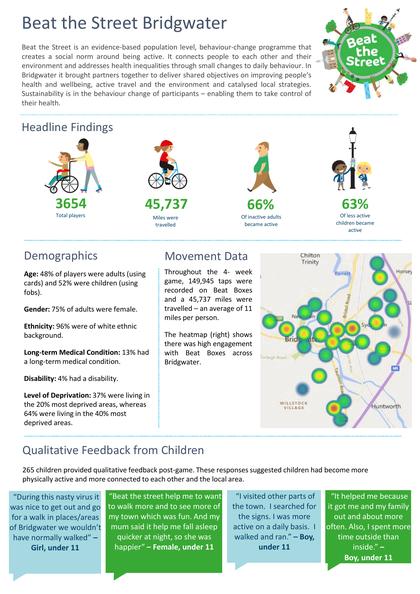
Evaluation of Somerset Activity & Sports Partnership (SASP)’s project – Beat the Street – which was run in Bridgwater in 2020. This is an evidence-based, mass participation programme that enables long-term behaviour change and improved partner working. It connects individuals with their local environment and supports people to make simple modifications to everyday behaviour. Includes a mix of qualitative and quantitative data and what behaviours have been changed as a result.
Beat the Street – Taunton evaluation
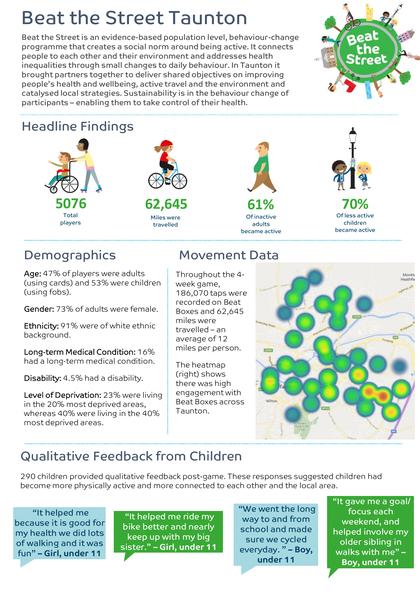
Evaluation of Somerset Activity & Sports Partnership (SASP)’s project – Beat the Street – which was run in Taunton in 2021. This is an evidence-based, mass participation programme that enables long-term behaviour change and improved partner working. It connects individuals with their local environment and supports people to make simple modifications to everyday behaviour. Includes a mix of qualitative and quantitative data and what behaviours have been changed as a result.
BMJ Military Health – Evaluation of NHS England ‘Op COURAGE’ High Intensity Service
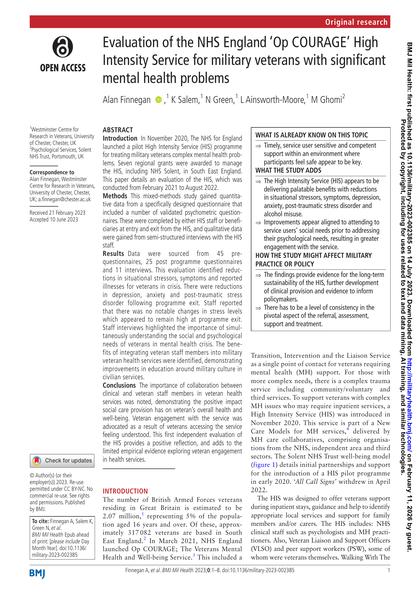
Mixed‑methods evaluation showing reductions in depression, anxiety and PTSD; highlights value of integrated veteran staff and social support.
Mendip Nature Connections – Evaluation Report (2025)
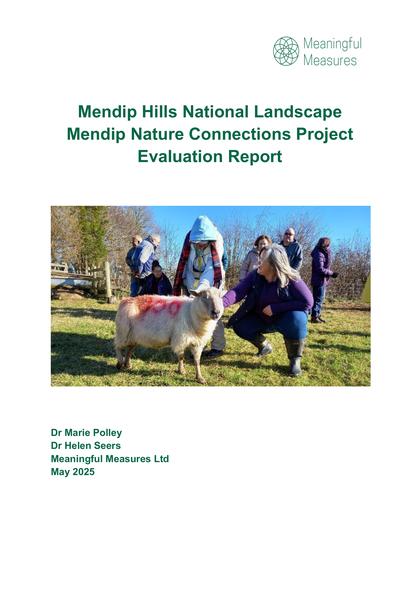
Independent evaluation of a nature‑based wellbeing programme in Mendip Hills National Landscape, with volunteer hours and outcomes
Minehead Eye Impact Report 2020 – 2023
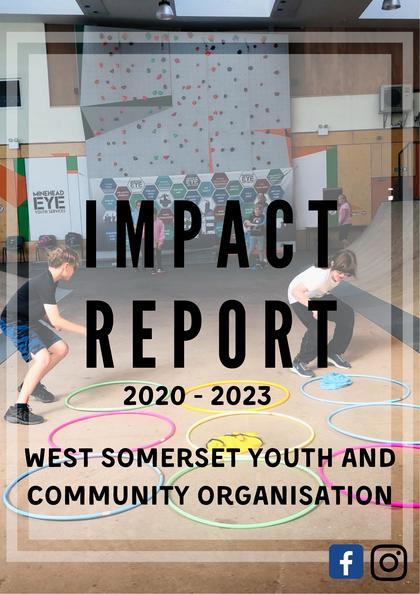
Minehead Eye Impact Report 2020 – 2023
West Somerset Youth and Community Organisation, a look at 3 years of progress.
HYPE 6 Month Update Report
This document is a report detailing the research undertaken by the HYPE (Hestercombe Young People Evolving) group, which is part of the Hestercombe LCN Children and Young People’s group. This project is part-funded by SALC and the parishes within the Hestercombe LCN.
With the findings from this research, we are now able to plan and deliver youth provision to young people in their communities.
Working Paper – The effects of youth clubs on education and crime
This report provides the first causal estimates of the effects of youth clubs on education and crime, leveraging quasi-experimental variation from austerity-related cuts, which led to the closure of 30% of youth clubs in London between 2010-19. Difference-in-differences research designs and novel data were used to compare neighbourhoods. Teenagers in areas affected performed nearly 4% worse in national high-school exams. Youths aged 10 to 17 became 14% more likely to commit crimes. Closing youth clubs was not cost-effective; for every £1 saved from closures, there are associated losses of nearly £3 due to forgone returns to education and crime costs.
Centre for Young Lives – Ambitious for Young People
The Centre for Young Lives outlines a vision for transforming youth provision in the UK, emphasizing safe spaces, engaging activities, and trusted adult relationships. The proposed Young Futures programme includes 1,000 youth centres, year-round activities, and 10,000 trained youth practitioners. This investment, costing £1.46 billion over three years, aims to address challenges like youth crime, mental health crises, and educational disparities. Alma Economics estimates a £2.40 return for every £1 invested, with benefits in education, mental health, and crime reduction. The report calls for sustainable funding and a coordinated national strategy to ensure equitable opportunities for all young people.