Young Dementia Network – The Angela Project
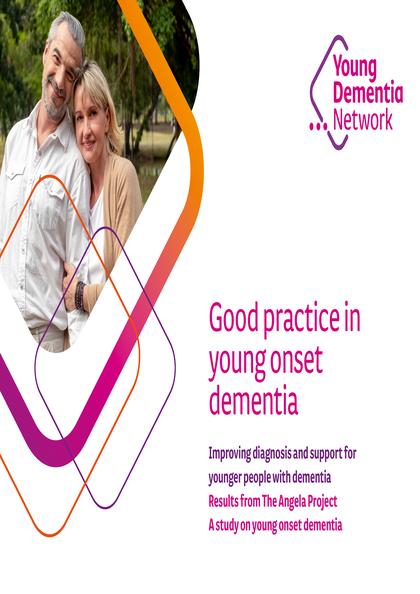
Good practice in young onset dementia
This document summarises the findings from The Angela Project, a 3 year long Alzheimer’s Society funded research study. Researchers consulted young people living with dementia and their families, international clinical experts and service providers in the largest study of young onset dementia ever carried out in the UK. It aims to raise awareness of inequalities and provide evidence-based recommendations for good practice on areas of diagnosis, patient support, post-diagnostic support and service design and delivery.
Libraries and dementia: connecting people with dementia
In 2022, Innovations in Dementia working with a number of libraries in the UK to explore their experiences of dementia and opportunities for further work and connection. This document outlines some key findings from that research, divided into 4 key sections: Key statistics about digital exclusion, ‘how to’ tips on bidding for and managing funded dementia projects, case study examples and ‘how to’ guides for supporting and encouraging people to access simple technology. Whilst aimed at libraries, findings apply to anyone considering dementia support and digital inclusion
Youth Matters – State of the Nation 2025
A report commissioned by DCMS’s Secretary of State, highlighting current patterns, challenges, and wants that are shaping young people’s lives. It draws together voices of 14,000+ young people aged 10-21 (up to 25 for those with Special Educational Needs and Disabilities (SEND)) who engaged in the National Youth Strategy Survey. It also uses insights collated through policy engagement, qualitative data collection and wider evidence collation. The report is partially based on commissioned research that was led by Savanta and their colleagues at My Life My Say and the #iwill Movement (Volunteering Matters and UK Youth) including their Youth Collaborators.
Power Threat Meaning Framework
The Power Threat Meaning Framework is an over-arching structure for identifying patterns in emotional distress, unusual experiences and troubling behaviour, as an alternative to psychiatric diagnosis and classification. The project team’s aim was to produce a foundational document which sets out the philosophical, theoretical and empirical basis for such a framework and describes how it can serve as a conceptual alternative to psychiatric classification in relation to emotional distress and troubled or troubling behaviour.
This is an overview. A full 400+ page report is available from the British Psychological Society.
HYPE 6 Month Update Report
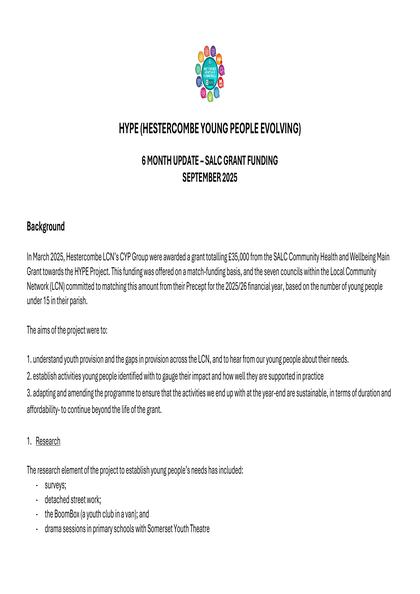
This document is a report detailing the research undertaken by the HYPE (Hestercombe Young People Evolving) group, which is part of the Hestercombe LCN Children and Young People’s group. This project is part-funded by SALC and the parishes within the Hestercombe LCN.
With the findings from this research, we are now able to plan and deliver youth provision to young people in their communities.
The Opportunity Index
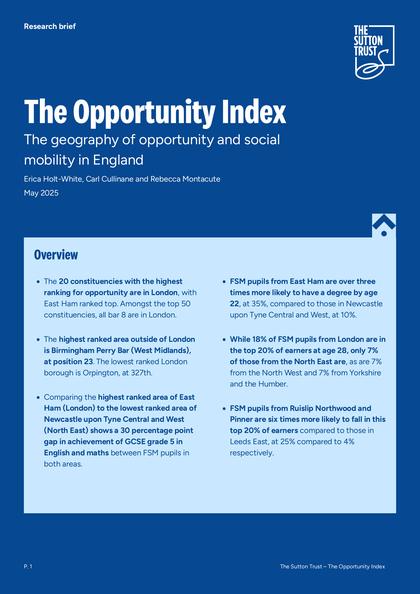
In this report, we provide the most detailed ever look at the geography of opportunity and social mobility in England. We closely examine how socio-economic background, geography and opportunity interact, with data looking at both parliamentary constituency and regional level in England. From educational attainment, to opportunities in higher education and employment, the research compares the outcomes of young people across the country, with a particular focus on the chances of social mobility for young people from lower income homes. Alongside the brief, there is an interactive map which can be accessed at: https://www.suttontrust.com/opportunity-indexinteractive-map
Centre for Young Lives – Ambitious for Young People
The Centre for Young Lives outlines a vision for transforming youth provision in the UK, emphasizing safe spaces, engaging activities, and trusted adult relationships. The proposed Young Futures programme includes 1,000 youth centres, year-round activities, and 10,000 trained youth practitioners. This investment, costing £1.46 billion over three years, aims to address challenges like youth crime, mental health crises, and educational disparities. Alma Economics estimates a £2.40 return for every £1 invested, with benefits in education, mental health, and crime reduction. The report calls for sustainable funding and a coordinated national strategy to ensure equitable opportunities for all young people.
Youth Work Matters – youth provision and life outcomes – a systemic literature review
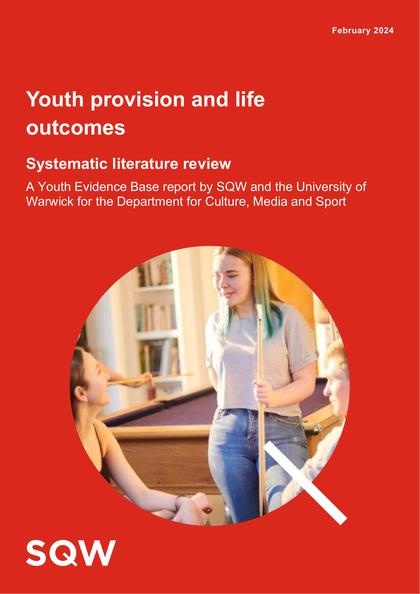
A Youth Evidence Base report by SQW and the University of Warwick for the Department for Culture, Media and Sport.
This review located and screened over 25,000 studies from across 22 major research databases and repositories. A total of 77 studies met the review criteria for relevance and suitability. Studies were quality assessed, organised within six activity areas, and analysed in-depth by area to better understand the impacts of open access youth activities
Youth Work Matters – youth provision and life outcomes – a study of longitudinal research
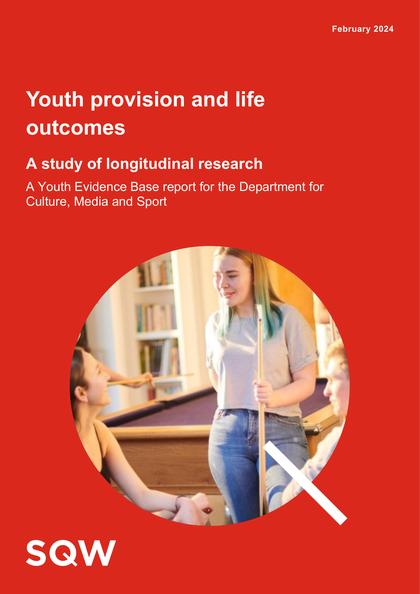
A Youth Evidence Base report for the Department for Culture, Media and Sport
Our research used five datasets to explore the effects of weekly participation in youth clubs on outcomes later in life. Four of the five datasets were longitudinal studies; the fifth was a rolling annual survey. The studies covered different generations of young people from the 1970s to 2000s, and the timing of outcome measurements reflected this.
Supported transfer of care from hospitals: Evaluating people’s experiences to help shape improvements in care – Healthwatch Somerset – April 2023
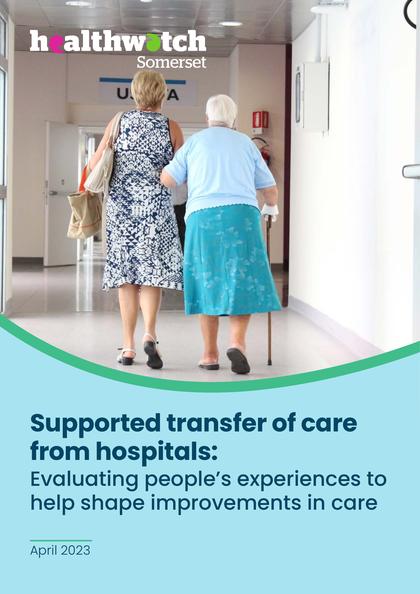
Healthwatch Somerset explores the quality of the transfer of care process in Somerset and use the experiences of people who have been discharged from hospital to inform the organisations involved to support change and improve the process.