A Growing Health Toolkit
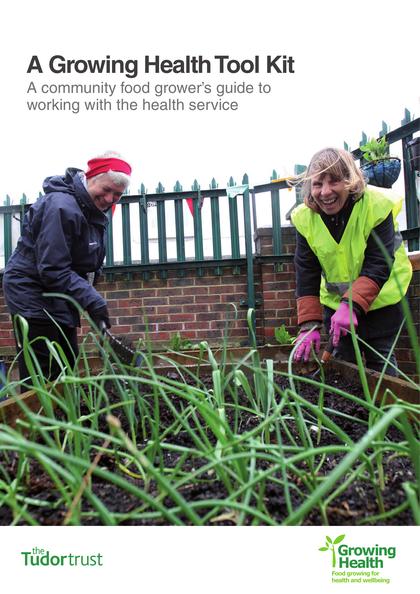
A Growing Health Tool Kit is a practical guide produced by Garden Organic and Sustain to help community food growing projects work with the health and social care system. It explains how health commissioning works, how to develop and present food growing activities as health services, and how to gather evidence and measure impact. The toolkit brings together research on the physical, mental and social benefits of gardening, alongside product examples, evaluation tools and case studies of commissioned projects. It is designed to support community growers to secure funding, build partnerships and contribute to public health outcomes.
A study of The Reach Foundation’s Cradle-to-Career Partnership
This document gives practical insights into cradle-to-career (C2C) models and community-based approaches for improving social mobility. It provides actionable steps, case studies, and 15 innovative practices that can be adopted to support under-resourced children and families. By reading, VCFSEs will gain strategies for partnership, community engagement, and sustainable impact, helping them drive joined-up, relational support and systemic change in their local areas. Holyrood School in Chard is one of the case studies
Women’s Aid: Nowhere to Turn 2024
The Nowhere to Turn 2024 report by Women’s Aid highlights the critical role of the No Woman Turned Away (NWTA) project in supporting survivors of domestic abuse facing barriers to safe accommodation. It provides insights into systemic inequalities, inadequate refuge spaces, and failures by statutory services to meet their legal duties. The report shares data and case studies, revealing the challenges women and children encounter, including financial hardship, unsuitable temporary housing, and further abuse. It emphasizes the need for sustainable funding, improved statutory support, and specialized training to ensure survivors can access safety and recover from abuse.
St Giles evaluation protocol
This document outlines the evaluation protocol for the SOS+ embedded mentoring programme, developed by St Giles Trust and evaluated by the National Centre for Social Research (NatCen). The programme aims to reduce violent offending among children and young people involved in criminal activity, youth violence, or exploitation by embedding mentors with lived experience in schools. It details the study’s rationale, methodology, target group, intervention design, and evaluation components, including impact, implementation, process, and cost analyses. The document also emphasizes equity, diversity, and inclusion, ethical considerations, and data protection measures, providing a comprehensive framework for assessing the programme’s effectiveness and scalability.
Stigma in the System
This report, “Stigma in the System,” explores how stigma is embedded in the UK social security system, impacting claimants’ financial security, mental health, and trust in the system. It examines public perceptions, institutional practices, and internalized stigma, revealing how these factors discourage people from claiming benefits they are entitled to. The report highlights the emotional toll of navigating the system and offers recommendations to humanize, simplify, and better resource social security, aiming to reduce stigma and improve outcomes for claimants. Essential reading for policymakers, advocates, and anyone interested in creating a fairer, more supportive welfare system.
Women’s Aid Annual Audit 2025
The Annual Audit 2025 by Women’s Aid provides a comprehensive overview of domestic abuse services in England during 2023-24. It highlights key findings on service demand, provision, funding, and systemic challenges, including a significant shortfall in refuge spaces, underfunding, and barriers faced by marginalized groups. The report also addresses the impact of rising living costs, international conflicts, and the need for sustainable funding and specialist support. It offers insights into the state of the sector, identifies gaps, and advocates for meaningful change to better support women and children affected by domestic abuse.
UK Trauma Council: Research Roundup Mar 2025
PECIAL EDITION #3 Childhood Trauma and Domestic Abuse
This document is a comprehensive research roundup on the impact of trauma and childhood domestic abuse, highlighting key factors that influence children’s mental health and recovery. It explores the emotional and psychological effects of domestic abuse, factors that exacerbate harm, protective elements fostering resilience, and evidence-based interventions like group therapy, art, and play. It emphasizes the importance of supportive relationships, tailored approaches, and intersectionality in addressing diverse experiences. Practitioners, researchers, and policymakers can use this resource to better understand and support children and young people affected by domestic abuse.
Safe Lives: Values and principles for effective multi-agency working
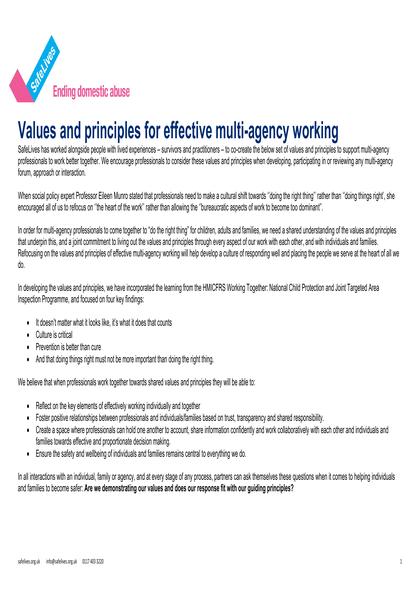
This document outlines values and principles for effective multi-agency collaboration to support children, adults, and families. It emphasizes a cultural shift towards “doing the right thing” over “doing things right,” focusing on trust, transparency, and shared responsibility. Key values include accountability, boldness, care, and dynamism, while principles stress flexibility, safety, inclusivity, and collaboration. It provides guidance for professionals to create impactful, person-centered responses, foster positive relationships, and ensure safety and wellbeing. Ideal for those seeking to improve multi-agency practices and prioritize the needs of individuals and families in their work.
Understanding stalking – beyond the myths
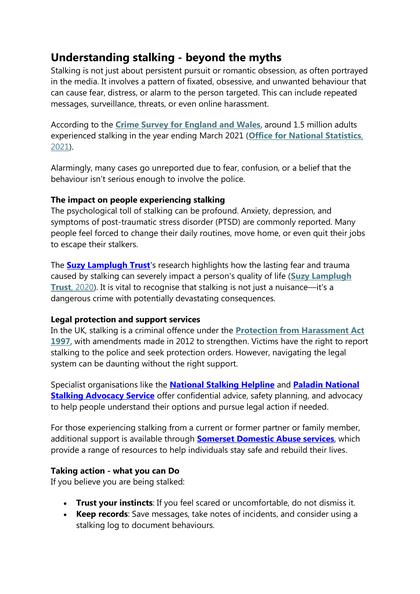
A blog post from Somerset Domestic Abuse that outlines what stalking is, its prevalance, the impact it can have and also signposting to places where statistics or support may be available
Somerset’s Domestic Abuse Strateg 2021-2024
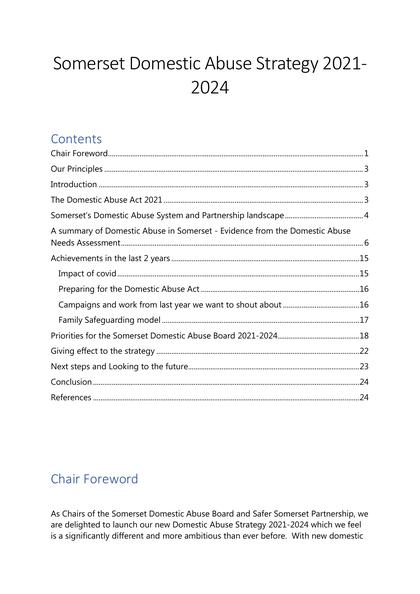
The Somerset Domestic Abuse Strategy 2021-2024 outlines the county’s approach to tackling domestic abuse, guided by the Domestic Abuse Act 2021. It includes key principles, evidence from a needs assessment, achievements, and the impact of COVID-19. The strategy focuses on supporting survivors, addressing perpetrators, preventing abuse, creating a robust system, and targeting underrepresented groups. It highlights priorities, funding allocations, campaigns, and training frameworks for professionals. The document is essential for understanding Somerset’s multi-agency efforts, strategic goals, and initiatives to improve support, raise awareness, and reduce domestic abuse across the community.