Power Threat Meaning Framework
The Power Threat Meaning Framework is an over-arching structure for identifying patterns in emotional distress, unusual experiences and troubling behaviour, as an alternative to psychiatric diagnosis and classification. The project team’s aim was to produce a foundational document which sets out the philosophical, theoretical and empirical basis for such a framework and describes how it can serve as a conceptual alternative to psychiatric classification in relation to emotional distress and troubled or troubling behaviour.
This is an overview. A full 400+ page report is available from the British Psychological Society.
Home Start West Somerset annual report
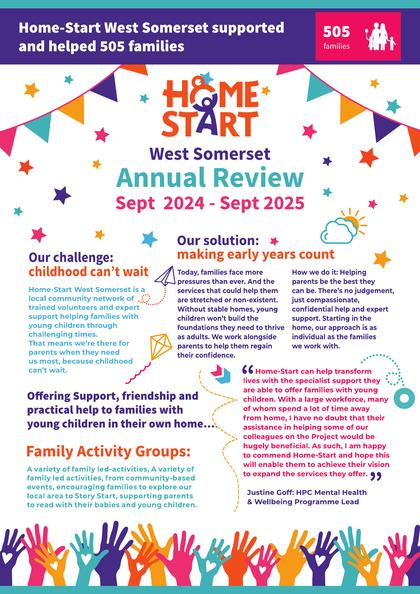
Home Start West Somerset annual report
Minehead Eye Impact Report 2020 – 2023
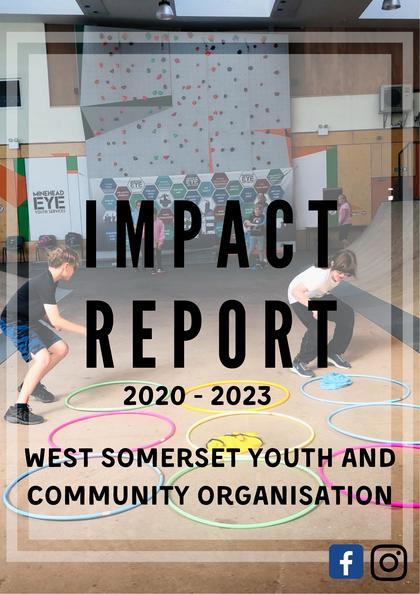
Minehead Eye Impact Report 2020 – 2023
West Somerset Youth and Community Organisation, a look at 3 years of progress.
HYPE 6 Month Update Report
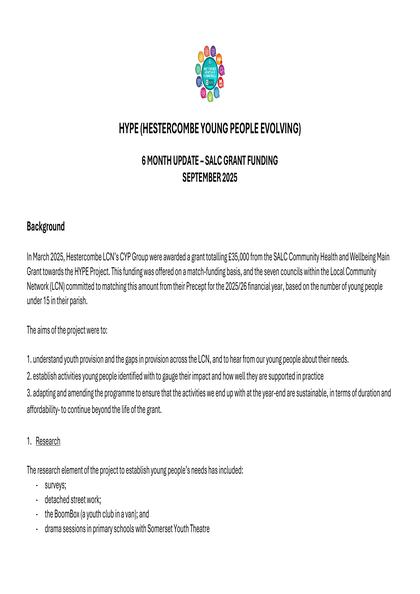
This document is a report detailing the research undertaken by the HYPE (Hestercombe Young People Evolving) group, which is part of the Hestercombe LCN Children and Young People’s group. This project is part-funded by SALC and the parishes within the Hestercombe LCN.
With the findings from this research, we are now able to plan and deliver youth provision to young people in their communities.
Working Paper – The effects of youth clubs on education and crime
This report provides the first causal estimates of the effects of youth clubs on education and crime, leveraging quasi-experimental variation from austerity-related cuts, which led to the closure of 30% of youth clubs in London between 2010-19. Difference-in-differences research designs and novel data were used to compare neighbourhoods. Teenagers in areas affected performed nearly 4% worse in national high-school exams. Youths aged 10 to 17 became 14% more likely to commit crimes. Closing youth clubs was not cost-effective; for every £1 saved from closures, there are associated losses of nearly £3 due to forgone returns to education and crime costs.
Making Community Spaces Youth Friendly – Community Spaces Audit
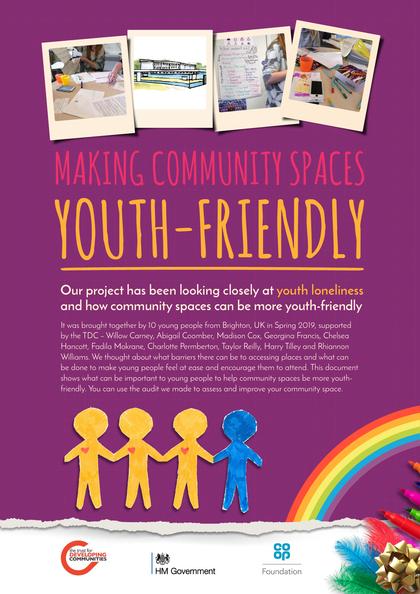
The Trust for Developing Communities developed an audit to help community spaces become more youth-friendly in a bid to combat youth loneliness.
The group explored the barriers that can prevent access to places. They questioned what can be done to make young people feel at ease and what would help encourage them to visit community locations. The resulting document forms a framework to help make community spaces more accessible to young people, including an audit which managers of such places can use to assess and improve their own spaces. An accompanying video is here: https://youtu.be/InW6CWVevUI
The Opportunity Index
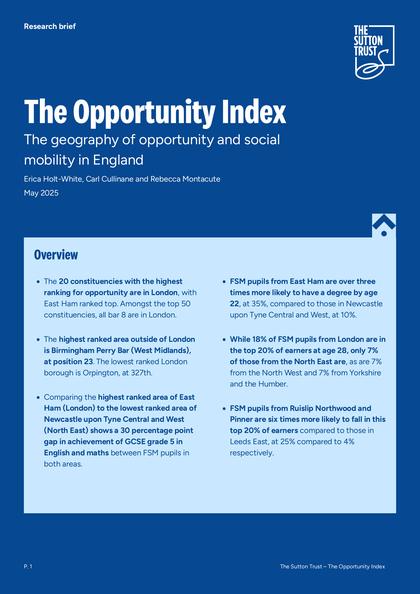
In this report, we provide the most detailed ever look at the geography of opportunity and social mobility in England. We closely examine how socio-economic background, geography and opportunity interact, with data looking at both parliamentary constituency and regional level in England. From educational attainment, to opportunities in higher education and employment, the research compares the outcomes of young people across the country, with a particular focus on the chances of social mobility for young people from lower income homes. Alongside the brief, there is an interactive map which can be accessed at: https://www.suttontrust.com/opportunity-indexinteractive-map
Centre for Young Lives – Ambitious for Young People
The Centre for Young Lives outlines a vision for transforming youth provision in the UK, emphasizing safe spaces, engaging activities, and trusted adult relationships. The proposed Young Futures programme includes 1,000 youth centres, year-round activities, and 10,000 trained youth practitioners. This investment, costing £1.46 billion over three years, aims to address challenges like youth crime, mental health crises, and educational disparities. Alma Economics estimates a £2.40 return for every £1 invested, with benefits in education, mental health, and crime reduction. The report calls for sustainable funding and a coordinated national strategy to ensure equitable opportunities for all young people.
UK Youth – In our own words
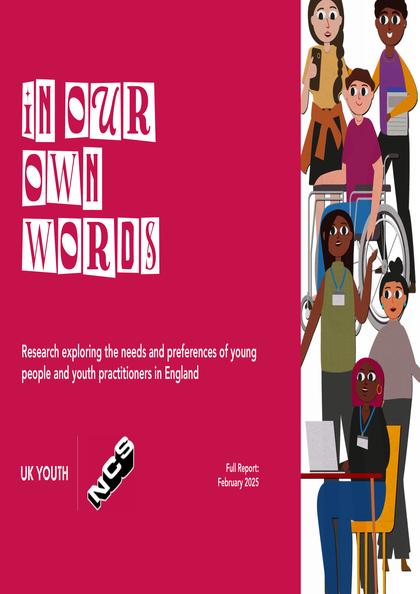
Research exploring the needs and preferences of young people and youth practitioners in England
National Citizen’s Service (NCS) want to understand the latest perceptions, needs and preferences of young people and youth practitioners across England, in relation to youth provision. In January 2024, NCS commissioned UK Youth to undertake qualitative research to explore this topic. Insights were gathered through mixed methods, with a strong focus on an innovative approach to soliciting and analysing audio-recorded testimonies.
National Youth Agency Strategy 2024-29 – Enabling great youth work to happen
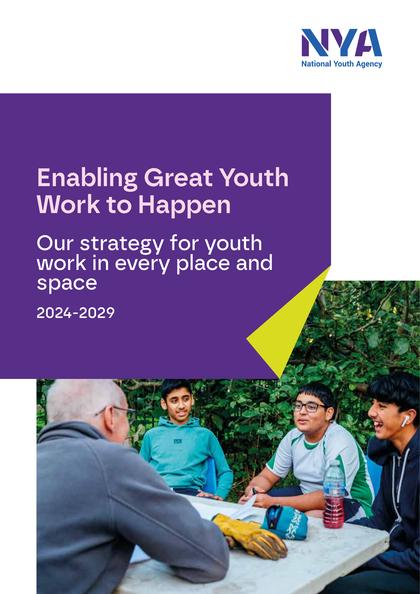
As the national body for youth work in England, the National Youth Agency exists to champion the value of youth work for young people, for local communities and for society. We work in partnership and believe in collaborative leadership, listening to youth workers and the youth work sector so that we can understand their needs and respond to the challenges they face. We are ambitious for youth work and for young people and integrate youth voice and influence across our work.